Phone Dropped in Water and Won't Turn On: Bench Repair Guide
 By Lucas Silva
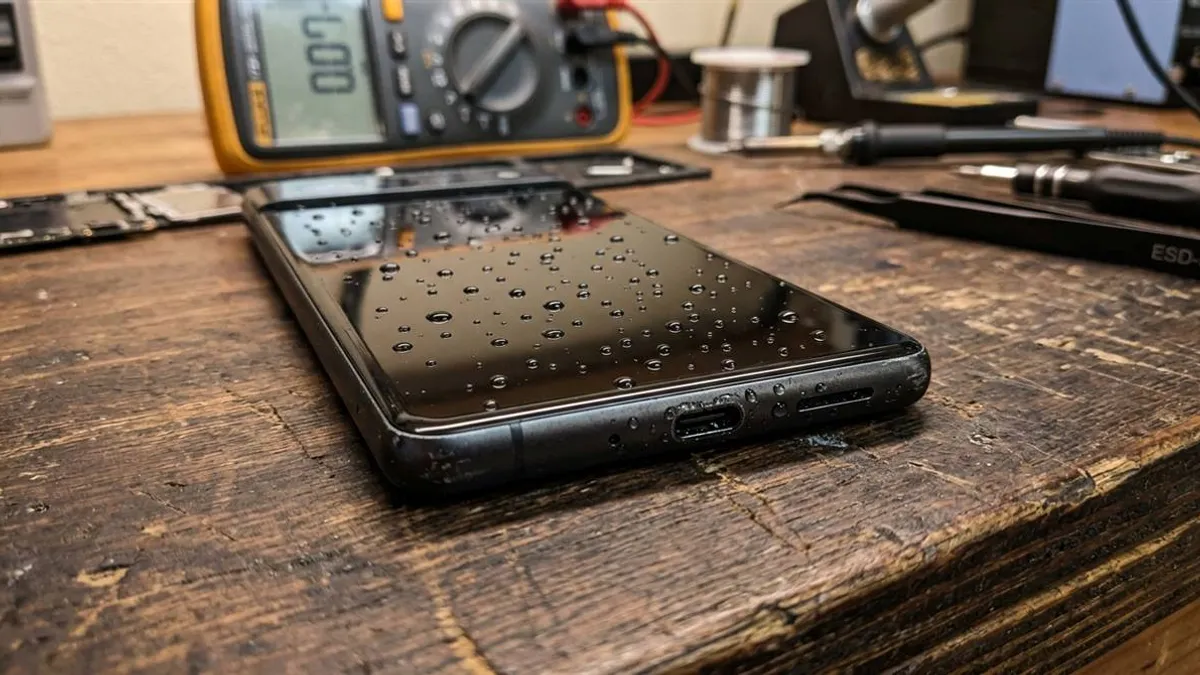
⚡ Bench Diagnostic Summary:
When a smartphone drops in water and goes completely black, resisting all attempts to power back on, users immediately fear the worst. However, in over 40% of bench cases, the phone is not permanently dead: its internal battery management system (BMS) has tripped into a protective lockout to prevent short-circuit fires.
Why the Phone Shuts Down and Refuses to Boot
A modern smartphone logic board is powered by a lithium-ion battery capable of delivering substantial instantaneous current. To prevent catastrophic thermal runaway or battery fires, battery packs include a Battery Management System (BMS) protection circuit board soldered directly to the lithium cells.
When liquid penetrates the phone and bridges the primary power rail (VCC_MAIN on iPhone or VBAT on Android), impedance collapses toward zero ohms. The BMS detects this massive short-circuit current spike and opens its internal MOSFET switches in under 5 milliseconds, cutting off all power to the CPU and display. The phone appears completely dead, but the motherboard has actually entered an emergency survival state.
The Fatal Mistake: Plugging in the Charger
When a phone won't turn on, 95% of users immediately plug in the charging cable, thinking the battery simply died. This is the single most destructive action you can take with a wet phone.
While the internal battery's protection circuit successfully disconnected internal power, plugging in a 20W, 45W, or 65W fast charger forces external current directly into the shorted circuit rails. The high voltage bypasses the tripped battery safety switch, vaporizing copper motherboard traces and permanently welding power management ICs (PMICs) into scorched silicon.
The Display Test: Is the Phone Truly Dead or Just a Black Screen?
Before declaring a phone dead, run the bench diagnostic test to determine whether the phone is truly unresponsive or simply suffering from a fried screen backlight:
- Flip the physical mute switch on iPhone or plug into a computer via USB while holding the device. Does the phone vibrate?
- Shine a bright flashlight directly against the glass display at a 45-degree angle. Can you faintly see app icons or a lock screen clock? If yes, the logic board is 100% alive; only the display backlight circuit or OLED panel was damaged.
- Call the phone from another device. Does it ring or register an incoming connection? If it rings, your data is safe and only a modular screen replacement is needed. Review the first 5 minutes water damage protocol to avoid worsening damage.
Unresponsive Wet Phone Symptom & Hardware Cause
Here is how bench technicians evaluate unresponsive water-damaged smartphones:
| Observed Symptom | Hardware Root Cause | Repair Complexity | Typical Bench Outcome |
|---|---|---|---|
| Vibrates but Screen Stays Black | Display backlight driver or OLED circuit dead | Moderate (Screen replacement) | 95% Success Rate |
| Completely Dead (0.00A Current Draw) | BMS safety lockout or short on main power rail | High (Ultrasonic bath + micro-solder) | 65% Success Rate |
| Bootloops on Logo & Shuts Off | Corroded Face ID / proximity sensor flex | Low (Disconnect sensor flex) | 90% Success Rate |
| Burning Odor / Extremely Hot Frame | Severe short-circuit thermal runaway | Critical (Component melting) | < 20% Success Rate |
Professional Bench Desoxidation and What to Expect
Never waste time putting a dead phone in a bag of rice; review our breakdown on why raw rice fails wet electronics. Take the device to a qualified independent micro-soldering technician.
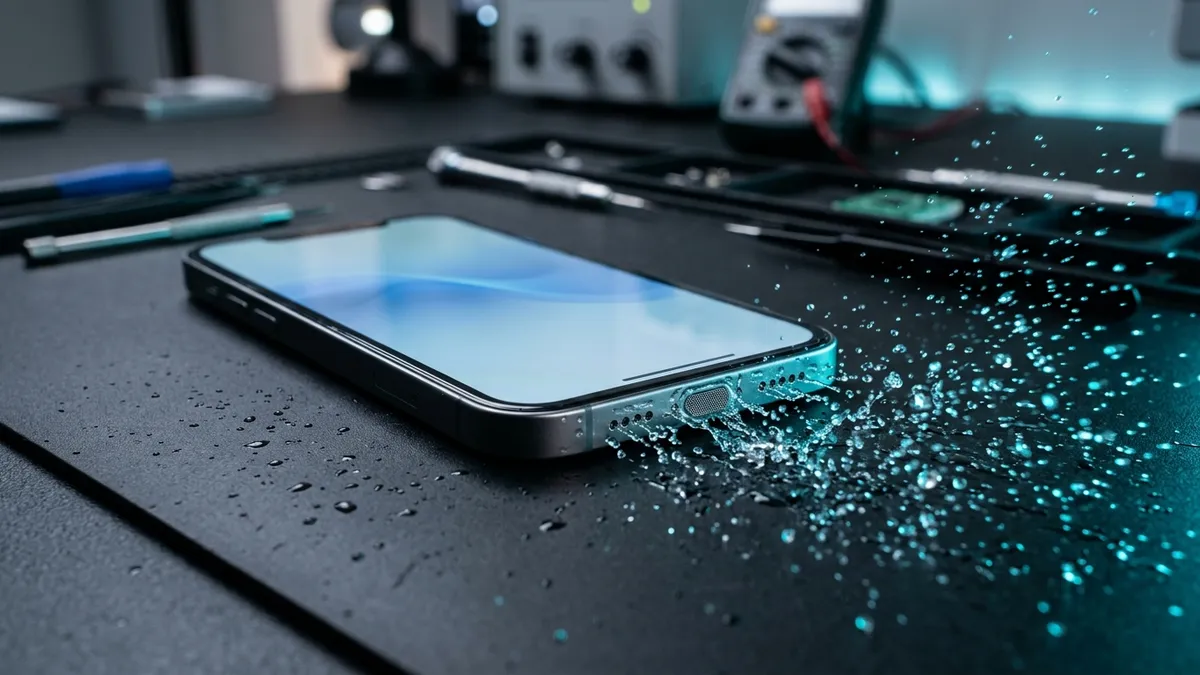
The technician will disassemble the logic board, remove electromagnetic shielding cans, and place the board in an ultrasonic bath filled with pure electronic solvent. Ultrasonic sound waves create microscopic cavitation bubbles that scrub away mineral salts and corrosion under BGA microchips. Once the board dries and powers on, run our free 165Hz Water Eject tool to ensure the speaker transducer is completely clear of trapped water.
Logic Board Diagnostics: Apple vs Samsung vs Android Platforms
When a phone is unresponsive on the repair bench, platform-specific diagnostic steps isolate the root failure:
- Apple DC Power Supply Test: We connect the iPhone to a bench power supply via specialized battery connector cables. If the multimeter draws 0.00A and jumps to 2.5A instant short upon prompt-to-boot, a capacitor on
VCC_MAINorVDD_BOOSThas shorted to ground. Thermal imaging cameras detect the glowing shorted component in seconds. - Samsung USB Current Meter: Plugging an unresponsive Samsung phone into a digital USB tester reveals current behavior. A 0.00A draw indicates a tripped BMS or blown sub-board fuse. A pulsing 0.15A to 0.40A draw indicates the CPU is trying to boot but is failing PMIC power rail checks.
- Xiaomi EMMC/UFS Power Failures: On budget Androids, liquid often destroys low-dropout voltage regulators (LDOs) feeding flash memory. Replacing these $2 micro-components restores the device and recovers 100% of user data.
Frequently Asked Hardware Questions
Why does my phone refuse to turn on after getting wet?
The internal battery protection circuit (BMS) automatically trips into an open-circuit safety lockout when it detects a low-resistance short, cutting all power to protect against fire.
Should I plug my phone into the charger to see if it turns on?
NEVER plug in a charger. Sending 5V to 20V of external current into a shorted board will permanently melt copper traces and destroy power management microchips.
Can a water-damaged motherboard be repaired?
Yes. Professional technicians perform ultrasonic bath desoxidation in 99% pure electronic solvent, followed by micro-soldering component replacement on shorted capacitors.
Written by Lucas Silva
Senior Audio Acoustics Engineer & Smartphone Hardware Specialist
Lucas Silva specializes in micro-soldering diagnostics, acoustic resonance calibration, and liquid ingress recovery across iOS and Android hardware architectures with 7+ years of bench laboratory experience.
Connect on Official LinkedIn