Phone Speaker Muffled After Water? How to Restore 100% Sound Clarity
 By Lucas Silva
⚡ Bench Diagnostic Summary:
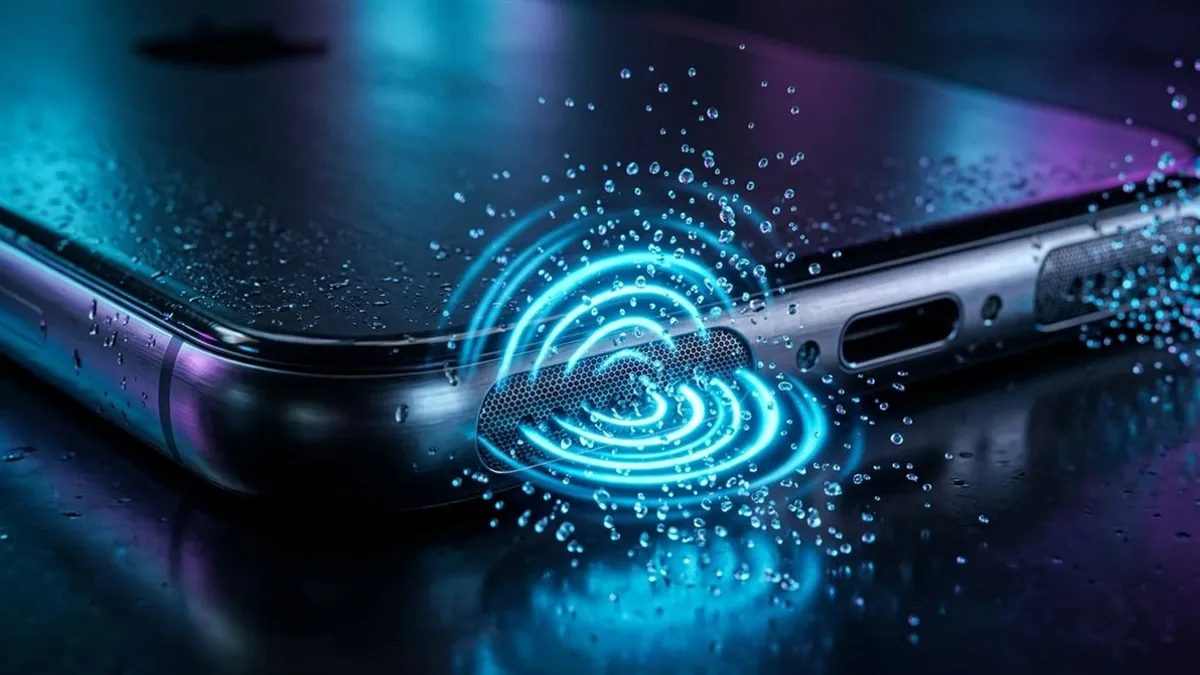
When a smartphone speaker sounds raspy, choked, or whisper-quiet after water exposure, the speaker coil is almost never burnt out. Instead, liquid surface tension forms a sealed meniscus across the microscopic pores of the hydrophobic mesh. Playing calibrated 165Hz to 360Hz acoustic waves shatters this liquid barrier in under 62 seconds.
The Physics of Muffled Sound: Surface Tension and the Acoustic Meniscus
When clients bring a muffled phone to my repair shop, they often assume the speaker coil has burned out and needs replacement. In over 85% of cases, the speaker hardware is perfectly functional. The real culprit is fluid dynamics and surface tension.
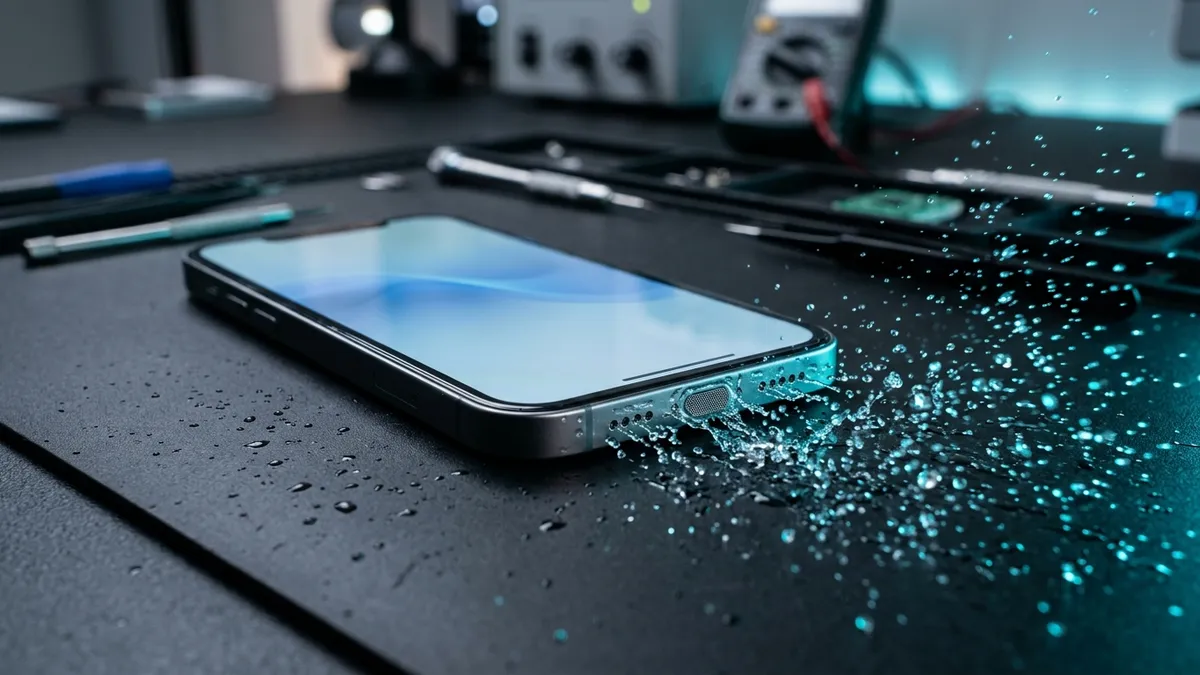
Smartphone speakers are protected by an ultra-fine mesh with pore openings smaller than 0.1 millimeters, treated with a hydrophobic fluoropolymer coating. When exposed to liquid, cohesive forces between water molecules create surface tension that forms a continuous liquid film across the mesh pores. This film acts like a physical dampening blanket: high frequencies cannot pass through, and the speaker output drops by 80% to 90%, producing a choked, underwater sound.
Why Waiting for It to Dry Naturally Ruins Audio Quality
Many users decide to ignore the muffled audio and simply wait 48 hours for the water to evaporate naturally. This is a severe mistake. Pure water evaporates cleanly, but tap water, pool water, and beverage spills are packed with dissolved solids, calcium, chlorine, and mineral salts.
As the liquid slowly dries, these mineral deposits crystallize directly onto the flexible silicone surround and voice coil spider of the speaker driver. Once this mineral crust hardens, the speaker cone can no longer flex freely, leaving the phone with a permanent buzzing distortion. You must actively expel liquid before it dries. To safely clear dry dust before ejecting liquid, review our guide on how to clean smartphone speaker grilles with sound waves.
The Worst Things People Do to a Muffled Speaker
When audio goes quiet, panic sets in and people reach for whatever is on the bathroom counter. Here is what I see wrecking speakers on my bench every week:
- Needles and Pins: A pin punches through the waterproof membrane and tears the mylar dome. Speaker rattles forever, IP68 gone.
- Hair Dryers: Hot air softens voice coil glue. The coil warps, scrapes the magnet, and you get permanent raspy buzz.
- Sucking on the Grille: People actually do this. Saliva enzymes corrode copper traces faster than rainwater. Plus — speaker grime in your mouth.
What Your Muffled Speaker Is Actually Telling You
Not all muffled audio means the same thing. Three different failure modes, each with a slightly different sound:
| Acoustic Symptom | Underlying Root Cause | Bench Recovery Action | Expected Outcome |
|---|---|---|---|
| Choked Underwater Audio | Surface tension water meniscus over mesh | 165Hz acoustic wave ejection cycle | 100% Clarity Restored |
| Raspy Buzzing Distortion | Dried mineral crust stiffening the surround | 360Hz high-stroke sweep + soft brush | 85% Improvement |
| Whisper Quiet at 100% Volume | Saturated dust cake inside acoustic port | Dry toothbrush sweep + 165Hz ejection | Full Volume Restored |
| Complete Total Silence | Burnt voice coil or severed audio IC trace | Modular speaker replacement needed | Hardware repair required |
Getting Your Full Volume Back (Right Now, No Tools Needed)
Alright, enough theory. Here is exactly what I do on my bench when a customer walks in with a muffled phone and needs it fixed in 5 minutes:
- Wipe the exterior speaker grilles with a clean microfiber cloth.
- Open our free Water Eject 165Hz Tool and set device media volume to 100%.
- Hold your phone vertically with speaker holes pointed downward toward a dark towel.
- Run two consecutive 62-second cycles. You will visibly see fine water droplets atomizing out of the acoustic slots onto the towel.
- For complete device drying procedures when water exposure was extensive, consult our full hardware guide on how to get water out of your phone.
Why One Frequency Does Not Work for Every Phone
People ask me why we can't just blast one tone for every phone on earth. It comes down to how big the speaker box is and how tight the mesh is:
- Apple iPhone (165Hz Resonant Frequency): 165Hz pushes the iPhone cone to max safe travel without bottoming out — biggest air punch to kick water off the grille.
- Samsung Galaxy (170Hz Resonant Peak): Samsung has a stiffer silicone surround. Needs 170Hz to hit peak air velocity and force fluid out through narrow side vents.
- Xiaomi & Redmi (360Hz Sweep): Xiaomi mesh has microscopic holes — water clings hard. A low hum won't break the seal. Takes a 360Hz tone to snap it loose. Higher frequency sound waves at 360Hz break liquid surface tension across these tiny holes far more effectively than low bass rumbles.
- Motorola (280Hz Harmonic): Motorola's nano-coated sound chambers respond best to a 280Hz sawtooth wave, which creates mechanical oscillation that causes water droplets to bead up and roll out of the angled port.
Frequently Asked Hardware Questions
Why does my speaker sound like it is underwater after getting wet?
Water droplets are held across the acoustic mesh pores by liquid surface tension, creating an acoustic barrier that blocks sound waves from radiating outward.
Will the muffled sound go away on its own if I wait?
If left to dry naturally, minerals and dissolved solids in the water dry into a crust on the delicate speaker diaphragm, permanently degrading audio clarity.
How does 165Hz sound eject trapped water from phone speakers?
A 165Hz low-frequency wave forces the speaker coil to move at maximum mechanical excursion, creating air pressure pulses that shatter liquid surface tension.
Written by Lucas Silva
Senior Audio Acoustics Engineer & Smartphone Hardware Specialist
Lucas Silva specializes in micro-soldering diagnostics, acoustic resonance calibration, and liquid ingress recovery across iOS and Android hardware architectures with 7+ years of bench laboratory experience.
Connect on Official LinkedIn