How to Clean Phone Speaker Without Damaging the Acoustic Cone
 By Lucas Silva
⚡ Bench Diagnostic Summary:
Most people clean their phone speakers using sewing needles, toothpicks, or canned air — three methods that repair technicians dread because they routinely rupture the delicate 0.02mm acoustic diaphragm. The safest, bench-verified method is non-invasive acoustic wave expulsion, which pushes debris outward using the speaker's own magnetic coil.
Why Phone Speakers Become Muffled and Crackly Over Time
A smartphone speaker is not a solid plastic wall; it is a microscopic open acoustic port designed to move air. Behind the precision CNC-drilled chassis holes sits a woven stainless steel mesh, backed by a micro-porous expanded polytetrafluoroethylene (ePTFE) hydrophobic membrane. Over months of everyday carrying, pocket lint, skin oils, cosmetic makeup, and ambient humidity combine into a greasy acoustic paste that blocks the tiny mesh pores.
When these ports become clogged by just 25%, sound pressure drops dramatically. High frequencies become tinny, bass notes distort into crackling rattles, and incoming phone calls sound distant and choked. If this clogging happens right after water exposure, the situation is even more urgent: trapped moisture creates a surface-tension barrier that prevents sound waves from escaping outward.
The Fatal Mistake: Needles, Toothpicks, and Canned Air
When audio output drops, the instinctive human reaction is to probe the speaker holes with whatever sharp object is within arm's reach: a sewing needle, safety pin, or sharpened wooden toothpick. This is the fastest way to turn a $0 cleaning task into a $120 modular speaker replacement on my repair bench.
The distance between the exterior metal grill and the delicate polymer diaphragm is often less than 1.2 millimeters. When a steel pin pushes through, it punctures the fine mesh, tears the waterproof acoustic membrane, and dents the voice coil dome. Canned compressed air is equally lethal: aerosol cans unleash localized pressure bursts exceeding 40 to 60 PSI, which instantly shreds the ePTFE membrane and blows compacted dirt directly onto the electromagnetic voice coil gap.
How Low-Frequency Acoustic Waves Expel Trapped Dirt and Water
Instead of poking from the outside, the physically sound method uses the speaker's internal electromagnetic voice coil to push debris outward. In physics, low-frequency sound waves in the 165Hz to 360Hz range generate high cone excursion — meaning the speaker cone physically pumps back and forth at maximum mechanical stroke.
By generating a calibrated sawtooth or square waveform at full volume, the transducer creates rapid localized air displacement pulses. This sonic air pump shatters liquid surface tension, breaks dry dust adhesion, and expels contaminants outward away from internal electronics. If sound remains raspy or quiet after removing dry debris, liquid is usually the culprit; in that case, check our diagnostic on fixing a muffled phone speaker to protect the voice coil.
Speaker Cleaning Methods Comparison Matrix
Here is how common speaker cleaning techniques compare in terms of safety, hardware integrity, and real cleaning efficacy:
| Cleaning Method | Mechanical Action | Membrane Safety | Bench Verdict |
|---|---|---|---|
| 165Hz Acoustic Waves | Internal air pulse pushes outward | 100% Safe (Engineered stroke) | Recommended (Zero contact) |
| Dry Soft-Bristle Toothbrush | Superficial surface sweep | Safe (If light pressure) | Effective for surface lint |
| Sewing Needle / Safety Pin | Sharp piercing force inward | Extremely Dangerous | Forbidden (Tears diaphragm) |
| Aerosol Compressed Air | High-pressure inward blast | Severe Rupture Risk (>40 PSI) | Forbidden (Blows dirt inside) |
The 3-Step Safe Bench Cleaning Protocol
To restore 100% audio clarity and volume without risking expensive component damage, execute this 3-step routine:
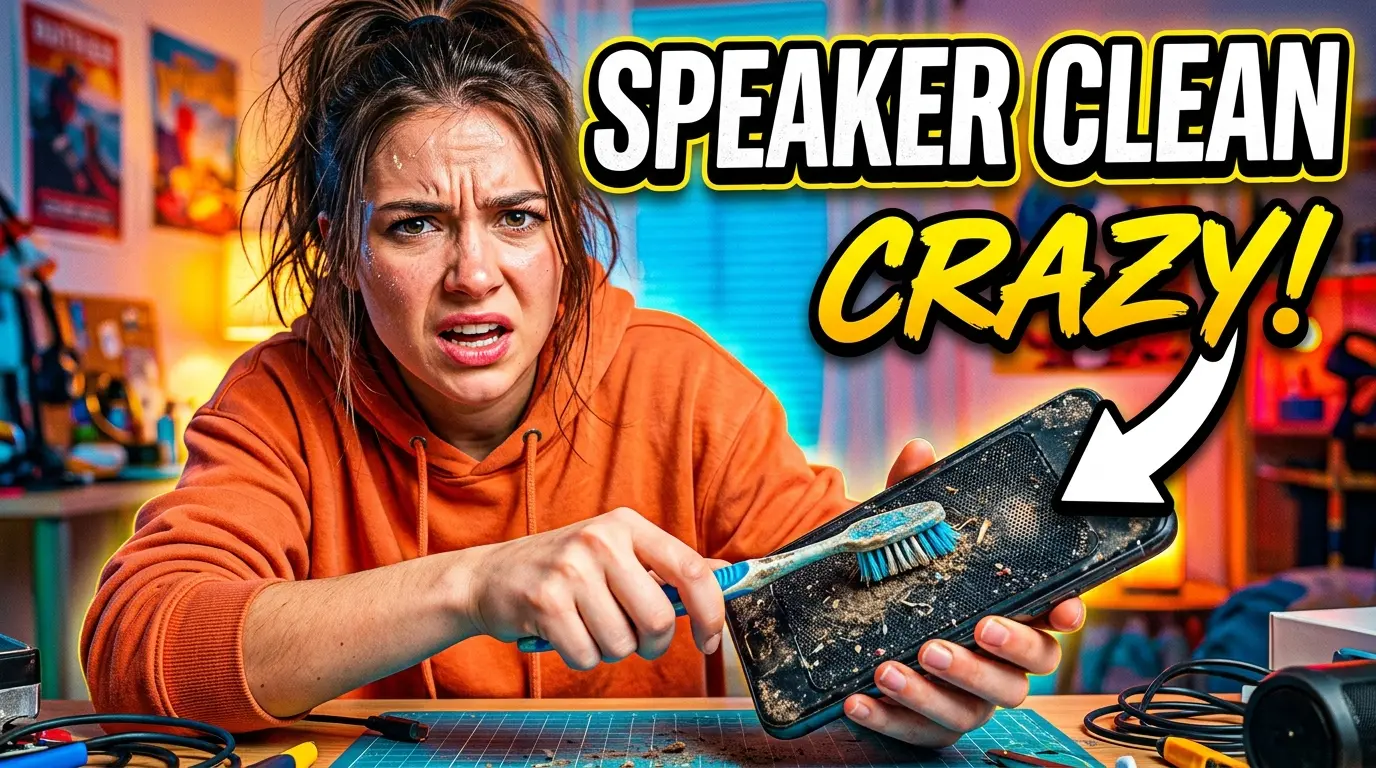
- Surface Dust Sweeping: Take a brand-new, ultra-soft dry toothbrush or ESD antistatic brush. Hold your phone upside down and brush the speaker grilles across the slots at a 45-degree angle. Never press bristle tips deep into the holes.
- Run 165Hz Acoustic Wave Ejection: Open our free Water Eject & Speaker Cleaner, turn device media volume to 100%, and initiate the 62-second cycle. Hold the handset vertically with speaker ports facing down over a dark cloth. You will visibly see dust flecks and moisture droplets ejecting onto the surface.
- Post-Ejection Inspection: Test audio playback with a complex voice track. If volume is restored, your acoustic chamber is clear. For full device drying procedures when liquid exposure is extensive, review our step-by-step hardware guide on how to get water out of your phone.
What Is Hiding Behind Your Speaker Grille
Before scrubbing at your speaker openings, know what sits right behind the mesh:
- Apple iPhone: Two speakers — bottom and earpiece. Behind the grille sits acoustic foam. A paperclip punches straight into the cone.
- Samsung Galaxy Drivers: Sound vents through narrow curved slots along the bottom. Pocket lint cements into those channels over months. A 170Hz sine tone cracks the crust loose for a soft brush to sweep out.
- Xiaomi & POCO: Dual grilles with incredibly tiny holes. Skin oil plus pocket dust forms a greasy plug. A 360Hz tone shakes the gunk loose — no disassembly needed..
- Motorola Devices: Frequently route bottom speaker audio through an angled plastic horn port. Brushing lightly at a 45-degree angle while playing low-frequency sweeps flings dried debris outward efficiently.
Frequently Asked Hardware Questions
Can sound waves damage smartphone speaker coils?
No. When playing at calibrated 165Hz to 360Hz frequencies, the voice coil excursion stays well within the physical safety limits engineered by the transducer manufacturer.
Why shouldn't I use compressed air cans on my speaker grilles?
Canned compressed air generates pressure blasts exceeding 40 PSI that easily rupture the ultra-thin 0.02mm hydrophobic membrane behind the exterior mesh, permanently destroying water resistance.
How often should I run acoustic cleaning cycles?
Run two full 62-second acoustic ejection cycles whenever audio sounds raspy, quiet, or immediately after your phone encounters moisture or dusty environments.
Written by Lucas Silva
Senior Audio Acoustics Engineer & Smartphone Hardware Specialist
Lucas Silva specializes in micro-soldering diagnostics, acoustic resonance calibration, and liquid ingress recovery across iOS and Android hardware architectures with 7+ years of bench laboratory experience.
Connect on Official LinkedIn